


Every aircraft that lands safely in East Africa does so because of an invisible, interconnected system of radar, radios, and weather sensors working in perfect coordination. Here’s what it takes to build that system — and why the standard cannot be allowed to slip
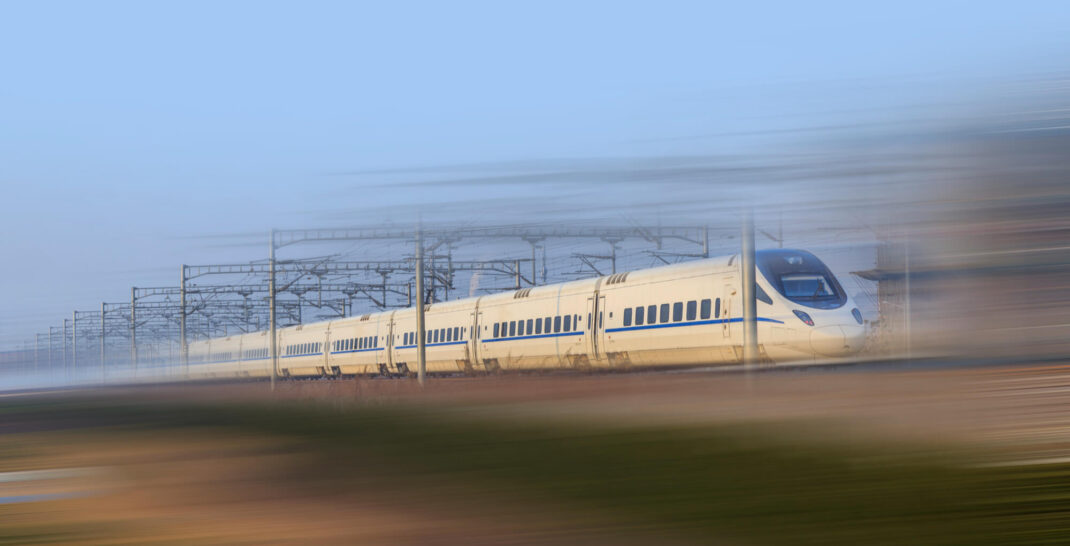
When people picture a modern railway, they picture the train. The sleek carriages, the speed, the punctuality. What they don’t picture — and what makes all of it possible — is the communications network running beneath the surface of the entire operation. For Tanzania’s Standard Gauge Railway (SGR), that network is GSM-Railway, or GSM-R: the international standard purpose-built for the unique demands of running a modern rail network safely.
As Tanzania’s SGR continues its rollout, the country joins a select group of nations operating world-class railway communications infrastructure — and East Africa’s railway sector is now standing at the edge of the next major technology shift.
Why Ordinary Mobile Networks Aren’t Good Enough for Railways
It might seem logical to assume that a railway could simply run on commercial mobile networks. It cannot — and the reasons are entirely about safety. Commercial GSM networks are not designed for the specific operational needs of a railway: functional addressing that connects a call to whoever is currently controlling a particular section of track, regardless of which physical phone they’re using; group calls that instantly reach every driver and maintenance team in an area in an emergency; and absolute network reliability across remote sections of track where commercial coverage is often patchy at best.
GSM-R was engineered specifically to solve these problems. It is the global standard used across more than 109,000 kilometres of railway in 22 countries — purpose-built so that train drivers, signallers, and control centres can communicate with zero ambiguity and near-zero failure tolerance.
What GSM-R Actually Delivers for a Railway Operator
- Functional addressing — calls automatically reach whoever is responsible for a given section of track, not a fixed phone number
- Group and broadcast calls — instant communication to all relevant staff in an emergency, with guaranteed priority over other traffic
- Integration with train control systems — GSM-R acts as the data bearer for systems like the European Train Control System (ETCS), enabling automatic train protection
- Geo-redundant core infrastructure — network architecture designed so that no single point of failure can take down railway communications
- Coverage engineered for the railway environment — including tunnels, cuttings, and remote rural sections where commercial networks simply don’t reach
“A railway signal is only as reliable as the network carrying it. GSM-R exists because trains cannot afford a dropped call.”
Tanzania’s SGR and the GSM-R Deployment Behind It
Delivering GSM-R infrastructure along an active railway corridor is a serious engineering undertaking. It requires detailed radio frequency planning across the entire route, precise base station placement to guarantee continuous coverage — including inside tunnels, where leakage cable solutions are required — and a geo-redundant core network capable of carrier-grade reliability from day one.
For Tanzania Railways Corporation (TRC), this infrastructure underpins the safe, modern operation of the Standard Gauge Railway. Every signal passed, every section of track cleared, and every emergency call placed depends on a GSM-R network engineered to perform without compromise — across the full length of the line, in every weather condition, every day.
The Next Frontier: FRMCS and the Move to 5G
The global railway industry is already preparing for what comes after GSM-R. The Future Railway Mobile Communication System, or FRMCS, is the emerging 5G-based standard set to replace GSM-R over the coming decade — bringing higher bandwidth, lower latency, and the kind of advanced data capability that today’s GSM-R networks were never designed to carry.
What makes this transition manageable rather than disruptive is that much of today’s GSM-R hardware is already built with FRMCS in mind. Modern base station platforms can often be upgraded to support 5G railway communications through software activation rather than a full hardware replacement — meaning railway operators investing in GSM-R infrastructure today are not investing in a dead-end technology. They’re investing in a platform with a clear upgrade path.
What FRMCS Will Enable
- Ultra-low-latency communications supporting more advanced automatic train operation
- Significantly higher data bandwidth for video, sensor data, and real-time diagnostics from trains and trackside equipment
- Continued backward compatibility with GSM-R during a phased, low-risk migration period
- A unified communications platform supporting both safety-critical signalling and broader operational and passenger services
Why This Matters for Railway Operators Across East Africa
As more East African nations invest in standard gauge and modern rail infrastructure, the lesson from Tanzania’s experience is clear: railway communications infrastructure is not a secondary consideration bolted on after the track is laid. It is foundational. A railway is only as safe, as efficient, and as future-ready as the communications network running beneath it.
Operators planning new rail corridors — or considering the eventual move from GSM-R to FRMCS — need partners who understand both the current operational standard and the direction the technology is heading. Getting that strategic choice right today determines how smoothly a railway network can evolve over the next twenty years.
Planning Railway Communications Infrastructure? | Speak to Our Railway Engineering Team → |