

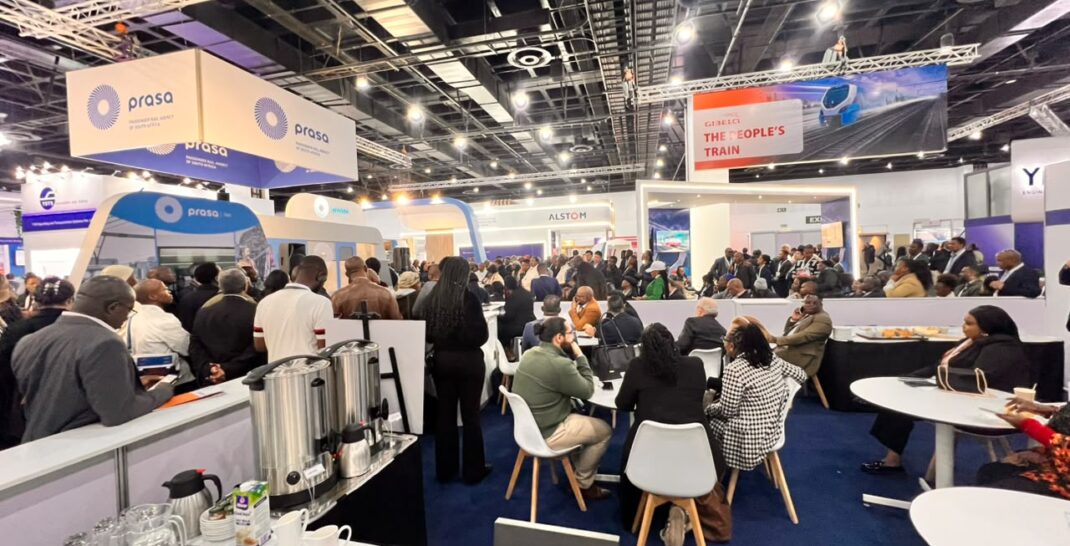
Africa Rail is not just Africa’s biggest railway conference. It is the place where the continent’s railway future is debated, deal-making happens at scale, and the technology shaping the next decade of African rail is put on the table. Our team was there — and here is what we saw, heard, and brought home
Every year, the Sandton Convention Centre in Johannesburg becomes the centre of gravity for everyone who is serious about the African railway sector — from ministers of transport and national railway operators to global technology providers, infrastructure financiers, and specialist engineering firms. Africa Rail brings them all into the same space, and the conversations that take place across those two days tend to reflect the real state of a continent in the middle of a genuine infrastructure transformation.
Imperial East Africa attended Africa Rail 2025 as part of our ongoing commitment to staying at the forefront of railway engineering and communications technology in East Africa. Our presence at the conference was as much about listening as it was about connecting — absorbing the strategic direction of the industry, deepening our partnerships, and understanding what our clients and the operators we serve will need from us over the next three to five years.
Here is a clear-eyed account of what the conference revealed, and what it means for railway infrastructure development across East Africa.
Theme 1: The Scale of Africa’s Railway Investment Pipeline Is Real
If there was one thing that Africa Rail 2025 made unmistakably clear, it is this: the investment pipeline for African railway infrastructure is not a projection — it is a programme that is actively moving. Across East, West, and Southern Africa, standard gauge railway projects, freight corridors, and passenger rail modernisation programmes are progressing from feasibility into financing and from financing into construction.
The conversations at conference level — between ministers, national railway operators, and multilateral development finance institutions — were not about whether African rail investment will happen. They were about the pace, sequencing, and technical standards that will govern it. For engineering and technology firms operating in the space, that distinction matters enormously: the window of opportunity is open and the specification decisions being made right now will determine which technologies, which standards, and which partners shape African rail for the next generation.
“The question at Africa Rail 2026 was no longer whether Africa’s railways would be modernised. It was who would deliver the technology, to which standard, and on which timeline.”
Theme 2: GSM-R Remains the Operational Standard — But FRMCS Is the Conversation
From a railway communications perspective, the dominant technology discussion at Africa Rail 2025 confirmed what Imperial East Africa already knows from our work on Tanzania’s Standard Gauge Railway: GSM-R is the proven, deployed, internationally certified communication standard for modern railway operations — and it will remain so across the majority of African rail projects being delivered over the coming decade.
But the forward-looking discussion at conference level has clearly shifted. FRMCS — the Future Railway Mobile Communication System, built on 5G — is no longer a distant concept. It is an emerging implementation reality in Europe, and the African railway operators and government delegations at Africa Rail 2025 were asking intelligent, specific questions about migration timelines, backward compatibility, and what investing in GSM-R infrastructure today means for their readiness to transition to 5G railway communications tomorrow.
The answer — which aligns with what Imperial East Africa advises our clients — is that the right GSM-R infrastructure investment is not a dead-end choice. Modern GSM-R platform hardware, including the Nokia base station systems we deploy for Tanzania’s SGR, is designed with a migration path to FRMCS built in. Operators investing in these platforms today are securing operational capability now and optionality for the future.
What This Means for East African Railway Operators
- GSM-R is the right technology to deploy now: for railways entering operations or mid-construction across the region
- Platform selection matters enormously: operators should choose GSM-R infrastructure with a documented FRMCS upgrade path to protect long-term investment
- The transition timeline is manageable: FRMCS migration does not require full hardware replacement on the right platform — it is a phased, software-led evolution
- Standards alignment with global practice: African railways adopting EIRENE-certified GSM-R now are building on the same technical foundation as European high-speed networks
Theme 3: Financing Models Are Evolving — and Opening New Doors
One of the most significant shifts visible at Africa Rail 2025 was in the financing conversation. Traditional public-sector procurement and state-funded development models are being supplemented — and in some cases replaced — by more sophisticated blended finance structures involving development finance institutions (DFIs), export credit agencies, public-private partnerships, and green infrastructure bonds.
For engineering and technology firms like Imperial East Africa, this evolution has a direct practical implication: the procurement processes and contract structures for major railway projects are becoming more complex, more internationally oriented, and more focused on demonstrated technical capability and certification credentials. The bar for entry as a technology partner or systems integrator on a major African railway project is rising — which is exactly where the value of established global technology partnerships becomes most visible.
Our partnership with Nokia — the world’s number one GSM-R vendor with deployments across more than 109,000 kilometres of railway globally — is precisely the kind of credential that opens doors in a more sophisticated procurement environment. It is not simply a product supply relationship. It is evidence of technical pedigree that international funders, operators, and procurement authorities recognise.
Theme 4: Safety, Signaling & Digital Integration Are Converging
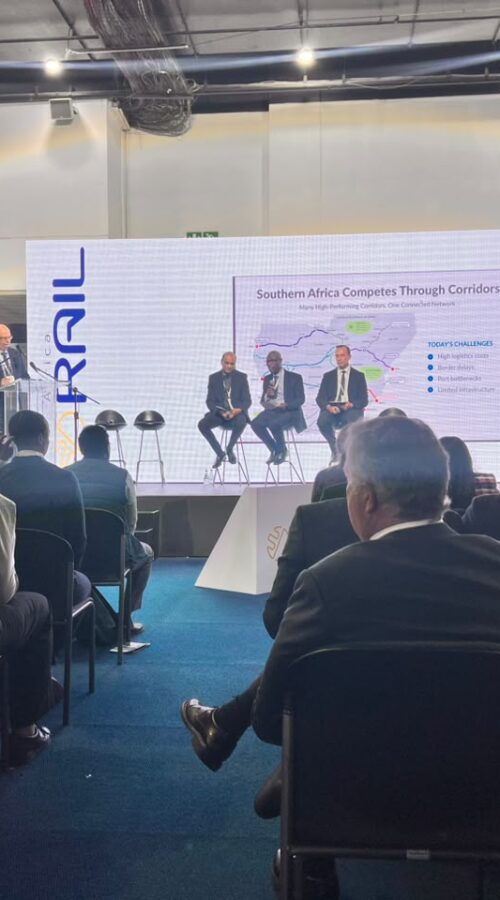
The technical conference sessions at Africa Rail 2025 reflected a broader industry trend that is accelerating: the convergence of railway safety systems, digital signaling, and data-driven operational management into integrated platforms that were, until recently, separate engineering domains.
Automatic Train Protection (ATP), ETCS Level 2 cab signaling, and GSM-R communications are no longer discussed as independent procurement decisions. They are increasingly understood as interdependent layers of a single digital railway operations stack — where the performance of each layer depends on the reliability and integration quality of the others. For systems integrators working in the railway space, this convergence demands a broader engineering view and a deeper understanding of how communication infrastructure supports — and is supported by — the wider signaling and control architecture.
This is a direction Imperial East Africa has been tracking closely, and it reinforces our approach of delivering railway communications infrastructure with the integration requirements of wider digital railway systems firmly in scope from day one.
What Imperial East Africa Took Away
Beyond the strategic themes, Africa Rail 2025 was two days of concrete, relationship-driven engagement. The conversations our team had on the floor of the Sandton Convention Centre — with railway operators, technology partners, infrastructure financiers, and peer engineering firms from across the continent — reinforced several convictions that drive how we work:
KEY TAKEAWAYS FROM AFRICA RAIL 2026 |
• East Africa’s railway infrastructure development is accelerating, not slowing — and the technical standards being embedded now will define operations for decades • GSM-R is the right investment for African standard gauge railway projects today, provided the platform chosen has a clear FRMCS migration path • Global technology partnerships are no longer a differentiator in sophisticated procurement environments — they are a prerequisite • The convergence of communications, signaling, and digital operations demands systems integrators who understand the full railway technology stack, not just individual subsystems • Africa Rail itself remains the single most important networking and intelligence-gathering event in the African railway calendar — and Imperial East Africa will be returning |
Looking Ahead: Imperial East Africa and the Railway Sector
Our attendance at Africa Rail 2026 was not simply a networking exercise. It was a deliberate investment in staying current, staying connected, and staying ahead of where the African railway sector is heading — so that when our clients face the engineering decisions that will shape their rail infrastructure for the next twenty years, we are the partner best positioned to help them make those decisions well.
Tanzania’s Standard Gauge Railway is one of East Africa’s most significant infrastructure programmes — and Imperial East Africa’s role in delivering Nokia GSM-R communications infrastructure for the TRC SGR is not a beginning and an end. It is the foundation of a long-term capability that we are continuously developing, deepening, and applying to the emerging railway opportunities across the region.
The conversations that started at Africa Rail 2026 will shape project pipelines, technology partnerships, and engineering decisions across East Africa over the coming years. We are in those conversations — and we are ready for what comes next.
Planning Railway Communications Infrastructure? | Talk to Our Railway Engineering Team → |